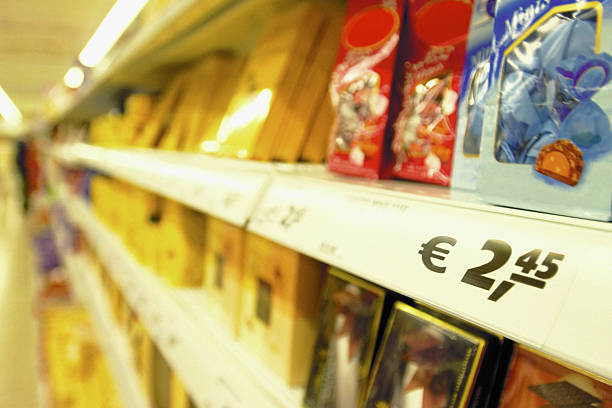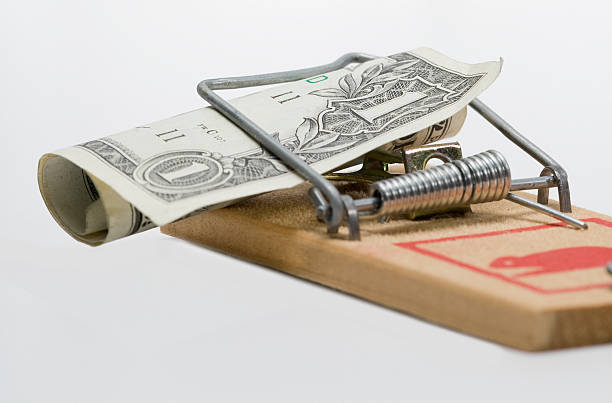

Every online shopper has been there. You find a product for a great price, add it to your cart, and proceed to checkout only to discover that the shipping fee transforms a bargain into a mediocre deal. The instinctive reaction is to search for a free shipping threshold. This psychological pivot is exactly what retailers have engineered, and it is costing consumers far more than they realize.
The “free shipping” threshold is one of the most profitable psychological traps in modern e-commerce. By offering free shipping on orders over a certain amount, retailers exploit what behavioral economists call the “sunk cost fallacy” wrapped inside a “pseudo-discount.“ The shopper who adds a $50 item to their cart sees a $9.99 shipping fee and feels a loss. The solution presented is simple: spend $25 more to unlock free shipping. What happens next is a transaction that almost always benefits the seller more than the buyer.
Consider the math. If your $50 item carries a shipping cost of $9.99, the effective price is $59.99. The retailer offers free shipping on orders over $75. You add a $25 accessory you do not really need. The total is now $75 with free shipping. On the surface, you saved $9.99. In reality, you spent $75 on items you intended to spend $50 on. Your net loss is not zero; it is $15.01 more than your original intended purchase. The retailer not only moved an additional $25 in inventory but also likely negotiated rates with carriers that make the actual shipping cost far lower than the $9.99 sticker price. The margin on that extra $25 of goods is pure profit after covering the true shipping expense.
This strategy works because it reframes the decision from “do I want to spend $25 more?“ to “do I want to avoid a $9.99 fee?“ The first question asks you to evaluate value. The second question triggers loss aversion, a cognitive bias where the pain of a loss feels twice as powerful as the pleasure of an equivalent gain. Paying shipping feels like a loss. Buying a marginally useful item to avoid that loss feels like a win. The brain stops calculating total cost and starts chasing a fee waiver.
The antidote begins with a simple shift in perspective. When you see a free shipping threshold, do not ask yourself how to avoid the fee. Ask yourself one question: “Would I buy this extra item if the store was across the street and I had to walk over to get it right now?“ If the answer is no, you are being manipulated. The only rational question is whether the total cost of the items you genuinely want, including shipping, is lower than any other available option. If the $50 item plus $9.99 shipping totals $59.99, and the exact same item is available from another seller for $57 with free shipping, the threshold offer is irrelevant. You compare final costs, not shipping stickers.
Another hidden cost appears in the form of “handling fees” and “processing charges.“ Some third-party marketplace sellers list products at a seemingly low price but recoup margin through inflated shipping and handling fees. This is particularly common on platforms like eBay, Etsy, and Amazon third-party listings. A listing might show a $15 item with $12 shipping. The shopper who only sorts by price sees the $15 figure and clicks. The smarter shopper sorts by total cost, ideally using tools that display price plus shipping together. Even without tools, a mental habit of adding the two numbers before clicking buy eliminates this trap.
Returns also carry hidden shipping costs that undermine apparent savings. A “free shipping” offer on an initial purchase means nothing if the return shipping fee is deducted from your refund. Some retailers prominently display free shipping but bury a restocking fee or return shipping cost in the fine print. For larger items like furniture or electronics, these return shipping fees can exceed $50. The effective cost of the item is not the purchase price plus outbound shipping; it is the purchase price plus the expected value of the return shipping fee multiplied by the probability you will return it. For categories with high return rates like apparel or footwear, this expected cost is significant.
A practical strategy for factoring in total cost involves creating a personal threshold of your own. Before you begin shopping for any item, decide on a maximum total cost that includes shipping, tax, and any potential return fees. Then search for the item without filtering by shipping terms. Compare the final price across at least three sellers. If one seller offers a lower base price but higher shipping, compute the total. If another offers a higher base price but free shipping, compute that total. The comparison is always between the final numbers. The emotional lure of a zero shipping line on a receipt is a distraction.
For subscription or recurring purchase items, the shipping cost compounds over time. A monthly subscription box that charges $29.99 plus $5.99 shipping delivers an annual total of $431.76. A competing subscription at $34.99 with free shipping costs $419.88 per year. The free shipping option is cheaper even though the sticker price is higher. This counterintuitive outcome is common when shipping fees are substantial relative to the item price. The consumer who never factors in shipping sees the $29.99 number as cheaper and loses $11.88 per year for no benefit.
The final element of total cost is the opportunity cost of time spent chasing thresholds. If you spend twenty minutes searching for a qualifying item to unlock free shipping, your time has value. At a conservative estimate of $20 per hour, that twenty-minute search costs $6.67 in time. Add that to your total cost. A $50 item with $9.99 shipping and a twenty-minute search has a true cost of $66.66. The same item from a seller offering free shipping at face value with a two-minute checkout costs $52.00. The perceived bargain turned into a $14.66 premium.
The most powerful change a shopper can make is to treat shipping and handling fees as part of the product price. Do not think of them as a separate penalty. Think of them as an extra cost that determines whether a good deal is truly good. When you remove the psychological separation between the item cost and the shipping cost, the threshold trap loses its power. You stop buying things you do not need to avoid fees you should not fear. The best shopping strategy is simply to add every number on the screen, compare that total to every other total, and ignore the emotional narrative about saving on shipping. You do not save money by avoiding a fee. You save money when you spend less overall.