
In an era where every dollar seems to have a destination before it even lands in your wallet, the concept of saving can feel like an uphill battle against inertia. Bills, subscriptions, coffee runs, and spontaneous online purchases chip away at even the most disciplined budgets. Yet, buried beneath the noise of daily spending lies a quiet, almost invisible mechanism that has redefined how millions of people accumulate wealth: the round-up app. At first glance, these digital tools appear trivial—mere pennies gathered from the leftovers of transactions. But beneath that surface lies a sophisticated psychological and financial principle that turns spare change into a powerful engine for long-term financial health.
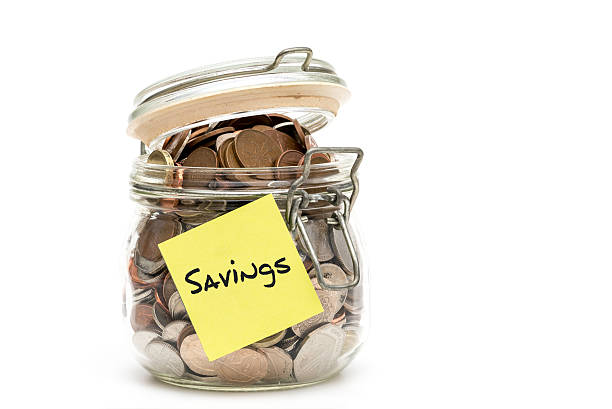
Round-up apps work by linking to your debit card, credit card, or bank account and automatically “rounding up” each purchase to the nearest dollar. The difference—the spare change—is swept into a savings or investment account, often without the user ever noticing. A $3.50 latte becomes a $4.00 charge, with fifty cents funneled into your savings. A $12.75 lunch rounds to $13.00, adding another quarter. Over a week, these fractions accumulate into tangible sums; over a year, they can grow into hundreds or even thousands of dollars. But the real genius of these apps is not the math; it is the behavioral science that makes saving feel effortless.
The human brain is wired to overlook small, irregular amounts. We are far more sensitive to large, visible deductions than to tiny ones that slip beneath our mental radar. Round-up apps exploit this cognitive bias by turning savings into a frictionless background process. You never have to decide to save; the decision is made for you, automatically, at the moment of purchase. This eliminates the willpower depletion that plagues traditional saving methods, where you must consciously transfer money into a separate account after resisting immediate gratification. By removing choice, round-up apps lower the barrier to entry for people who know they should save but struggle to start.
Moreover, these apps capitalize on the endowment effect and loss aversion. Once the spare change leaves your checking account, it is gone—you cannot spend it. Psychologically, the money never really felt like yours to begin with because it was never in your hands in a meaningful way. The app treats that spare change as “found money” rather than “saved money,” which reduces the pain of saving. In fact, many users report that they do not miss the rounded-up amounts at all. This subtle reframing turns saving from a sacrifice into a passive gain.
Beyond the psychological appeal, round-up apps offer a unique entry point for building broader financial habits. For those who have never saved before, watching a few dollars accumulate into a hundred can be a transformative experience. It provides tangible proof that small actions matter. This sense of accomplishment often snowballs into more deliberate financial behaviors. Users begin checking their savings balances, researching investment options, or even creating budgets. The round-up function acts as a gateway drug to financial literacy. Once you see pennies turn into a portfolio, you start to wonder what else is possible.
Yet, the true hidden power of round-up apps lies in their ability to unlock compound growth over time. While the spare change itself may seem insignificant, when invested in diversified portfolios—many apps now offer low-cost index funds or automated robo-advising—the real magic happens. A fifty-cent round-up today, when invested at a modest six percent annual return, could be worth several dollars in a few decades. Multiply that by thousands of transactions over a lifetime, and the sum becomes meaningful. For a person who spends $50 per day on average, the round-ups could amount to roughly $15 to $20 per week, or nearly $800 a year. Invested over thirty years with compound interest, that could grow to over $60,000. For relatively little effort, the average consumer can amass a significant nest egg.
However, these apps are not without caveats. They work best for people who have consistent spending habits and low to moderate balances. If you are living paycheck to paycheck, rounding up can inadvertently cause overdrafts or stress. Additionally, some apps charge monthly fees or require minimum balances, which can eat into the very savings they aim to build. There is also the danger of “savings inflation,” where users feel absolved from making larger, more impactful savings decisions because they are satisfied with the small amounts being collected. Round-up savings should complement, not replace, a deliberate saving strategy such as allocating a fixed percentage of income.
Critics also point out that the money saved via round-ups often represents discretionary spending—items like coffee, snacks, or minor impulse buys. If you reduce that spending instead of rounding up, you would save even more. But that logic ignores human nature. People are unlikely to stop buying coffee entirely for the sake of a few saved cents. The round-up app exploits the gap between what we should do and what we actually do. It is a pragmatic solution for imperfect humans.
Ultimately, round-up apps are less about the pennies themselves and more about the habit they instill. They prove that saving does not have to be painful, deliberate, or large. It can be as easy as letting your transactions work for you in the background. By automating the smallest increments of wealth accumulation, these apps transform spare change into a steady, reliable current that carries you toward financial security. The key is to start, to trust the process, and to let those tiny fractions of a dollar do the heavy lifting over time. In the battle between spending and saving, round-up apps tilt the scales gently but persistently in your favor—one coffee, one lunch, one purchase at a time.