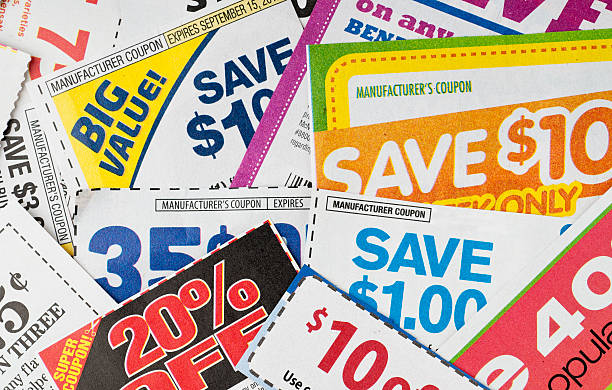

The average shopper walks into a grocery store believing they are making rational decisions. They compare two jars of pasta sauce, choose the one on sale, and proceed to checkout with a sense of financial victory. Yet hidden in the fine print of every shelf tag lies a universal truth that most consumers overlook: the price on the front is a decoy, and the real battle is fought in the margins of weight and volume. This is where barcode scanning, when directed at unit pricing through the right browser tools and mobile apps, transforms from a mere price-checking gadget into a weapon of mass savings.
The fundamental issue is that manufacturers and retailers deliberately obfuscate pricing. A 24-ounce jar of sauce might cost four dollars, while a 32-ounce jar costs five dollars. The cheaper jar in absolute terms is actually the more expensive one per ounce, yet the human brain, fatigued by a long aisle of fluorescent lights and endless labels, defaults to the smaller number. This cognitive shortcut is precisely what retailers exploit. Barcode scanning breaks this spell because it instantly retrieves the unit price—the cost per ounce, per gram, per square foot, or per count—and presents it without the emotional manipulation of packaging design or sale stickers.
Consider the practical application. You are standing in front of a wall of laundry detergent. Some bottles promise concentrated power in a small package; others offer a massive jug that seems like a great deal. Scanning the barcode on the concentrated bottle might reveal a unit price of twelve cents per load, while the giant jug, despite being cheaper in total dollars, actually costs eighteen cents per load because of the water weight and filler ingredients. Without the scanner, you would have grabbed the jug and assumed victory. With the scanner, you see the truth.
This technique extends far beyond the grocery store. Hardware stores, big-box retailers, and even online marketplaces are riddled with pricing inconsistencies based on size and quantity. A common trap is the “bonus pack” that contains twenty percent more product for only ten percent more money. Scanning the barcode of the standard size and the bonus pack side by side reveals that the bonus pack is indeed a good deal, but often the scanner uncovers that a different brand entirely offers an even lower unit price without the marketing gimmick. The scanner does not care about brand loyalty or flashy labels; it cares only about the mathematical ratio of price to substance.
The integration of this scanning capability into browser tools and mobile apps has made the process seamless. You no longer need to squint at tiny shelf labels or perform mental math with fractions. A simple scan pulls up a database of historical prices, competitor prices, and, most critically, the unit cost. For online shopping, browser extensions can automatically overlay unit price information onto product pages, allowing you to sort by value rather than by total price. This is particularly useful when buying in bulk online, where the per-unit savings are often hidden behind subscription discounts or multi-buy offers that obscure the true cost.
Another overlooked application is in the realm of non-food items like paper towels, toilet paper, and cleaning supplies. These products are notorious for changing sheet counts, roll dimensions, and concentrated formulas. A twelve-roll pack of paper towels might seem like a no-brainer value until scanning reveals that each roll contains only fifty sheets, whereas a six-roll pack of a different brand contains one hundred sheets per roll. The total square footage is identical, but the price per square foot is drastically different. The scanner reveals this instantly, saving you from hauling home a bulky pack that offers no actual savings.
The key to mastering this strategy lies in developing a habit. Every time you pick up an item, even one you have bought a hundred times, scan it. Prices change. Packaging changes. Formulas shrink in what economists call “shrinkflation,” where the package stays the same size but the contents are reduced. Scanning the barcode of a familiar product might reveal that its unit price has quietly increased by twenty percent over the past year, while a competing brand remains stable. Knowledge is power, and in the consumer world, that power is stored in the barcode.
Ultimately, the goal is to shift your mindset from total price thinking to unit price thinking. The scanner is the tool that enforces that discipline. It takes the guesswork out of comparison and places the data directly in your hand. In an era where inflation and clever marketing conspire to drain your wallet, the barcode scanner is not a gimmick—it is a financial advisor that fits in your pocket. Use it before every purchase, and you will find that the biggest savings are not found in sale flyers but in the fine print revealed by a single sweep of your camera.