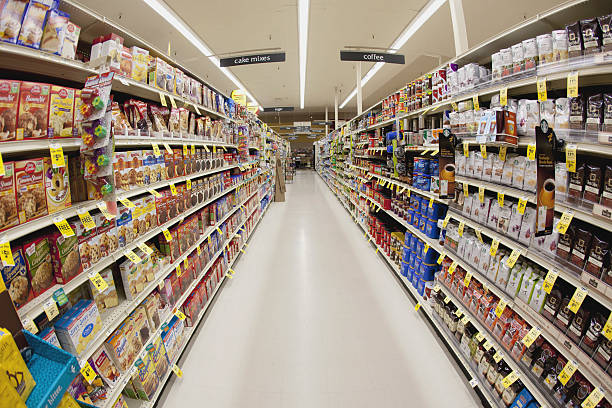

When you push your cart down the supermarket aisle, your eyes naturally drift to the familiar packaging of national brands like Heinz, Tide, and Kellogg’s. The bright logos and trusted names feel safe. But a few feet away, sitting on a lower shelf, sits the store brand version—often at a price that is thirty to fifty percent cheaper. Most shoppers automatically dismiss these generics as inferior, assuming a lower price means lower quality. The truth, however, is far more surprising. Many store brand products are actually produced in the same factories, by the same manufacturers, using the same ingredients, as their expensive name brand counterparts. This phenomenon is known as “copycat manufacturing” or “private label production,” and it represents one of the easiest and most overlooked opportunities to cut your grocery bill in half without sacrificing taste, nutrition, or performance.
The first thing to understand is that major retailers like Walmart, Target, Costco, and Kroger do not own their own food processing plants. They contract with established manufacturers to produce their private label items. Those manufacturers are often the very companies whose name brands you already buy. For example, a store brand can of diced tomatoes may come from the same supplier as the Del Monte can sitting next to it. The recipe may be identical, or only slightly adjusted to meet a specific price point, but in many categories—canned vegetables, pasta, sugar, salt, baking soda, and even over-the-counter medications—the active ingredients are chemically identical. The U.S. Food and Drug Administration regulates these products strictly, so store brand medications must contain the same active ingredients in the same concentrations as the name brand equivalents.
Beyond manufacturing, store brands offer several distinct advantages that go beyond price. Retailers have a strong incentive to ensure their own label products are of high quality because their reputation is directly on the line. If you buy a generic cereal from Target and it tastes like cardboard, you may not blame the unknown manufacturer—you blame Target. As a result, many retailers employ rigorous quality control and blind taste tests to match or exceed the national brand standard. Some chains, such as Costco with its Kirkland Signature line, have built a cult following precisely because shoppers recognize that Kirkland products often outperform premium brands in independent tests. The same is true for Trader Joe’s, which sells almost exclusively private label goods; customers consistently rate them as high or higher than comparable name brand items.
Of course, not every store brand item is a perfect clone. There are categories where generic versions fall short, and wise shoppers learn to distinguish between them. Highly processed foods with complex recipes, such as gourmet cookies, specialty sauces, or organic frozen meals, sometimes show a noticeable difference in flavor or texture when compared to the name brand. Similarly, personal care items like shampoos, lotions, and deodorants may contain different fragrance blends or slightly different chemical formulations that alter how they feel on your skin or hair. The trick is to experiment. Buy one store brand item at a time. If you like it, you have just found a permanent way to save money. If you do not like it, you are out at most a dollar or two, and you can simply go back to the name brand for that specific product.
One of the most consistently high-performing categories for store brands is pantry staples. Canned beans, canned tomatoes, pasta, rice, flour, sugar, salt, baking powder, and spices are almost always identical in quality to the national brands. Many spices, for instance, come from the same spice grinders and packers; the only difference is the label. Another category where generics shine is dairy: milk, eggs, butter, and yogurt are essentially commodity products. No dairy cow produces milk that is better because its carton says a specific brand name. Similarly, plain frozen vegetables—peas, corn, broccoli, green beans—are flash-frozen at peak ripeness regardless of the brand, so buying the store brand version saves money with zero compromise.
Baking goods are another sure win. All-purpose flour is flour. Baking soda is sodium bicarbonate, period. White sugar is sucrose. There is no secret ingredient in Domino sugar that makes it sweeter. Yet consumers routinely pay a twenty to forty percent premium for the name brand. Over the course of a year, those small differences add up to significant savings. If a family saves two dollars each week on a handful of generic staples, that is over one hundred dollars annually—enough to cover a nice dinner out or a small emergency.
There is also a psychological barrier that keeps people from switching. The fear of being seen as “cheap” or the belief that name brands signal social status can override rational decision-making. But in a time when inflation eats into household budgets, the smartest shopper is the one who separates brand loyalty from actual product performance. Many store brands have undergone rebranding in recent years to look more modern and appealing. Walmart’s Great Value, Albertsons’ Signature Select, and Kroger’s Private Selection now feature sleek packaging and clear labeling that rivals anything on the shelf. Some even offer premium lines that compete head-to-head with organic and gourmet labels.
Ultimately, the decision to buy store brands is not about settling for less; it is about paying for the product, not the marketing. Every dollar you save by choosing the generic tomato sauce or the private label trash bag is a dollar you can redirect toward something that truly matters to you, whether that is a vacation, a retirement account, or simply a little extra breathing room in your budget. The next time you walk down the aisle, pause and pick up the store brand version. Read the ingredients. Compare the net weight. Then consider what you are really getting for that extra price: a logo, a jingle, and decades of advertising. The product itself? It may be exactly the same.