
For decades, shoppers have approached the store brand aisle with a mixture of skepticism and hope. The lower price tag is undeniably attractive, but a persistent doubt lingers: is the quality really comparable? Generations of advertising have drilled into consumers the idea that name brands represent a gold standard of flavor, texture, and nutritional value, while generic alternatives are somehow second rate. Yet a growing body of evidence, along with the open secrets of the manufacturing world, reveals that this belief is largely a carefully constructed fiction. In reality, store brands often equal or exceed their name brand counterparts in blind taste tests, nutritional profiles, and ingredient lists, making them one of the most powerful tools in any household’s savings strategy.
The first and most surprising discovery for many shoppers is that store brand products are frequently produced by the same manufacturers that make the leading name brands. Large food and household goods companies operate multiple production lines, and when they run below capacity, they contract with retailers to produce private label versions. These products are made to the same specifications, using the same equipment, and often the same raw ingredients. The only difference is the label and the price. In some cases, a store brand might even use a slightly tweaked formula to meet the retailer’s cost targets, but the gap is far narrower than marketing departments want consumers to believe. Blind taste tests conducted by consumer magazines and independent organizations consistently show that store brand items—from canned vegetables to peanut butter to breakfast cereal—are indistinguishable from name brands in flavor and texture. In certain categories, store brands actually win, such as in premium store lines that have been reformulated to rival gourmet options.
Nutritionally, the story is even more compelling. Government regulations require that the Nutrition Facts panel on any packaged food be accurate. Store brand products must meet the same food safety and labeling standards as any other product on the shelf. A granola bar from a private label will contain the same calories, sugars, and fiber as a name brand version, with the same enforceability. While name brands sometimes add extra vitamins or market “organic” claims, the core nutritional equivalence is standard across most commodity categories. In fact, some store brands have become proactive about reducing sodium, sugar, and artificial additives, responding to consumer demand for clean labels. Retailers like Costco’s Kirkland Signature, Trader Joe’s, and Target’s Good & Gather have built reputations for quality that sometimes surpass traditional big brands, using higher quality oils, fewer preservatives, and transparent sourcing.
The psychological barrier remains, however. The packaging of store brands is often simpler, with less appealing graphics and a design that signals “cheap.” This visual cue primes the brain to expect a lower quality experience, a phenomenon known as the price-quality heuristic. Even when the product tastes identical, shoppers report a preference for the name brand simply because they assume higher price equals higher quality. Savvy consumers can overcome this by conducting their own blind taste tests at home with family members, pitting a store brand against a name brand in an unmarked bowl. Time and again, the results surprise them. Once the label is removed, the difference vanishes.
Another advantage of store brands is consistency. Name brands occasionally change recipes, reduce package sizes (shrinkflation), or alter ingredient sources to cut costs. Store brands, because they are produced under long-term contracts, often maintain a stable formula. Retailers know that their private label is a point of differentiation and customer loyalty, so they are careful to keep quality high. If a national brand suddenly starts using lower-quality oil or reducing the number of chips in a bag, the store brand remains unchanged, offering a reliable alternative that actually delivers more value.
Of course, not every store brand product is superior. Some categories, such as highly processed flavored snacks or complex sauces, may have subtle differences that some consumers detect. And the very cheapest store brands—those sold by discount chains with a pure economy positioning—might use less expensive ingredients. But the majority of store brand items, especially those from major chains like Walmart’s Great Value, Kroger’s Simple Truth, or Albertsons’ O Organics, have undergone significant quality improvements over the last decade. The old stereotype of the gray, bland, cardboard-tasting generic is largely outdated.
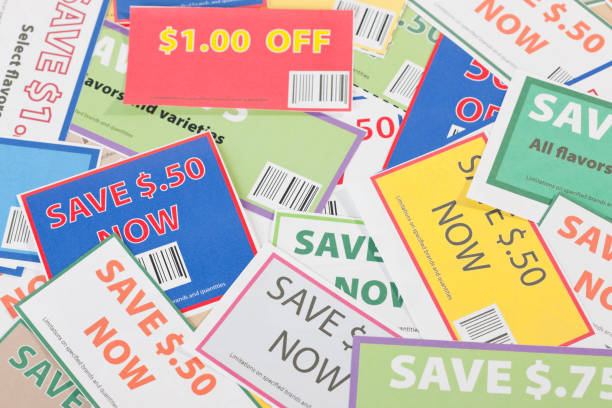
The financial impact is staggering. According to industry estimates, switching from name brands to store brands can save a typical family of four between twenty-five and forty percent on their grocery bill, amounting to thousands of dollars per year. That money can be redirected toward higher priorities like savings, debt reduction, or healthier fresh foods. The key is to be strategic: start with staple items like baking ingredients, canned goods, dairy, frozen vegetables, and paper products, where the quality differences are minimal or nonexistent. For highly specialized items like artisanal cheese or gourmet pasta sauce, it may be worth sticking with a trusted brand, but for everyday essentials, store brands are a no-brainer.
Ultimately, the decision to buy generic is not about settling for less; it is about recognizing that smart shopping requires questioning assumptions. The name brand’s higher price is largely paying for advertising, not for better ingredients. By choosing store brands, consumers reclaim that markup and keep it in their own pockets. The myth of inferior quality is just that—a myth. Taste, nutrition, and safety are already baked into the product, regardless of what the label says. The best way to save is to trust your own palate, read the ingredients, and let the price tag be the final judge.